
By late October, AGEPoly’s CdA (Commission d’Activités) and the student delegates voted down two motions proposed by a group of EPFL students: endorsing the PACBI (Palestinian Campaign for the Academic and Cultural Boycott of Israel) guidelines and affirming the protection of fundamental rights on campus—freedom of assembly and freedom of speech. The refusal came amid repeated crackdowns on students who, far from disrupting campus, have been expressing a critical stance on the genocide in Gaza through recognizably academic formats: public panels on ecocide, femonationalism, and forensic architecture; film screenings; and discussions with invited experts. In other words, students practiced exactly what universities claim to cultivate—testing ideas, weighing evidence, and debating in public—yet met securitization, cancellations, and disciplinary threats. Student associations exist to represent students, defend fundamental rights, and rebalance power when the institution takes authoritarian detours. At EPFL, however, AGEPoly often appears busy in meetings but hesitant in public when fast, visible action is needed. What follows revisits three episodes that expose this representation gap and why passivity persists.
Polyquity suspension (December 2024)
Polyquity, a feminist student association, scheduled a talk the student affairs office judged “too political.” The office suspended Polyquity for six months. Students filled an Extraordinary General Assembly to defend the association and to contest the institution’s unilateral statement that disregarded victims of the genocide in Gaza and the war in Lebanon. Under pressure, the institution signalled a partial step back and a review of the relevant directives. AGEPoly engaged procedurally—driven by student pressure and lobbying—but did not issue a strong, timely public defense of the right to organize such events. The result was a persistent gap between backstage work and the concrete protection student groups can rely on when exercising free expression.
SG Hall occupation (May 31, 2024)
Students held a peaceful sit-in in SG Hall. Security was tightened. Students reported physical and verbal violence while calmly chanting for the liberation of occupied land and for divestment from institutions complicit in genocide. AGEPoly discouraged escalation, but again there was no prompt, visible statement calling for de-escalation by security or for the protection of protest rights. In a crisis, representation must do two things at once: reduce harm and publicly defend students’ rights. Silence reads as absence—and complicity.
VivaPoly (May 2025)
During the festival, students—still carrying conscience on their shoulders—protested the presence of an association promoting a state committing grave war crimes. Security, called by the
institution, intervened as students peacefully chanted; members of the association reportedly mocked and insulted them. Informal statements and counter-statements circulated, while targeted students were pushed into procedures escalating to police stations (read more in our article: “”). Even if private discussions occurred, the lack of a clear, public stance from AGEPoly when it mattered reduced trust—both among students directly targeted and among peers concerned for their safety.
Why this pattern?
Instead of engaging in a power stuggle to support it’s student, Agepoly’s only move is their frequent dinning with the EPFL’s complicit administration. Between two boot kissing toasts, there is no time for demands and negociations. In fact, any demands that may compromise their good standing with the institution is carefully killed a long serie of giant buraucratic nightmares put in place by 70 years of treacherous liberal commitees. The leadership’s only mode of communication with the administration is closed-door cocktails. That approach protects relationships—and keeps parties and drinks nicely funded.
Any will of the committee to claim different things than «what is expected» — like asking to protect students’ freedom of speech instead of a temporary pool in the middle of Esplanade — is quickly repressed by the institution in mails mixing passive aggressive blackmailing and juridical pursuit. The overstated juridical pursuits not only would put the committee under tremendous stress and anxiety but create a chronicle fear of engagement with mobilized students willing to openly fight for their rights.
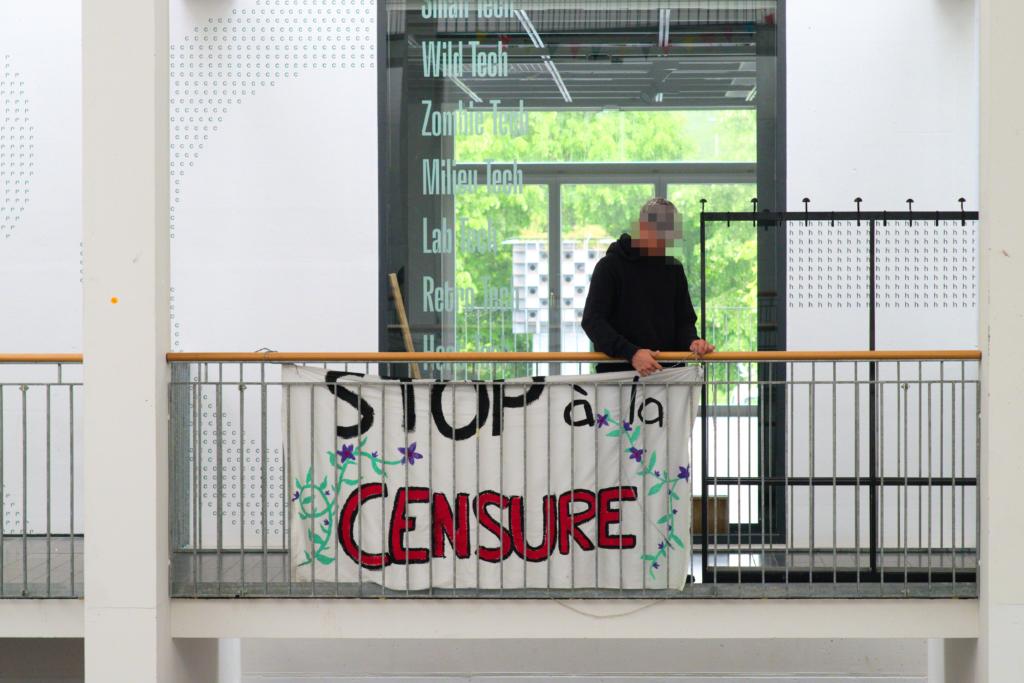
My lastest take on the subject
After the late-October votes by the CdA and the delegates, both motions were rejected; there will be no General Assembly to reverse them. That decision locks in the status quo of private negotiations and public silence. The path forward is therefore outside the AG: build a campus-wide coalition of students, faculty, and staff; draft and seek broad endorsement of a rights charter; document every incident; and keep practicing the very intellectual exercises—teach-ins, panels, screenings—that define academia, while insisting the institution live up to its own mission. If formal representation will not defend those rights in public, students will have to build the structures that do.
Will AGEPoly change narratives and strategically collaborate with the student mobilization anticipating the protection of their own rights and integrity ?